
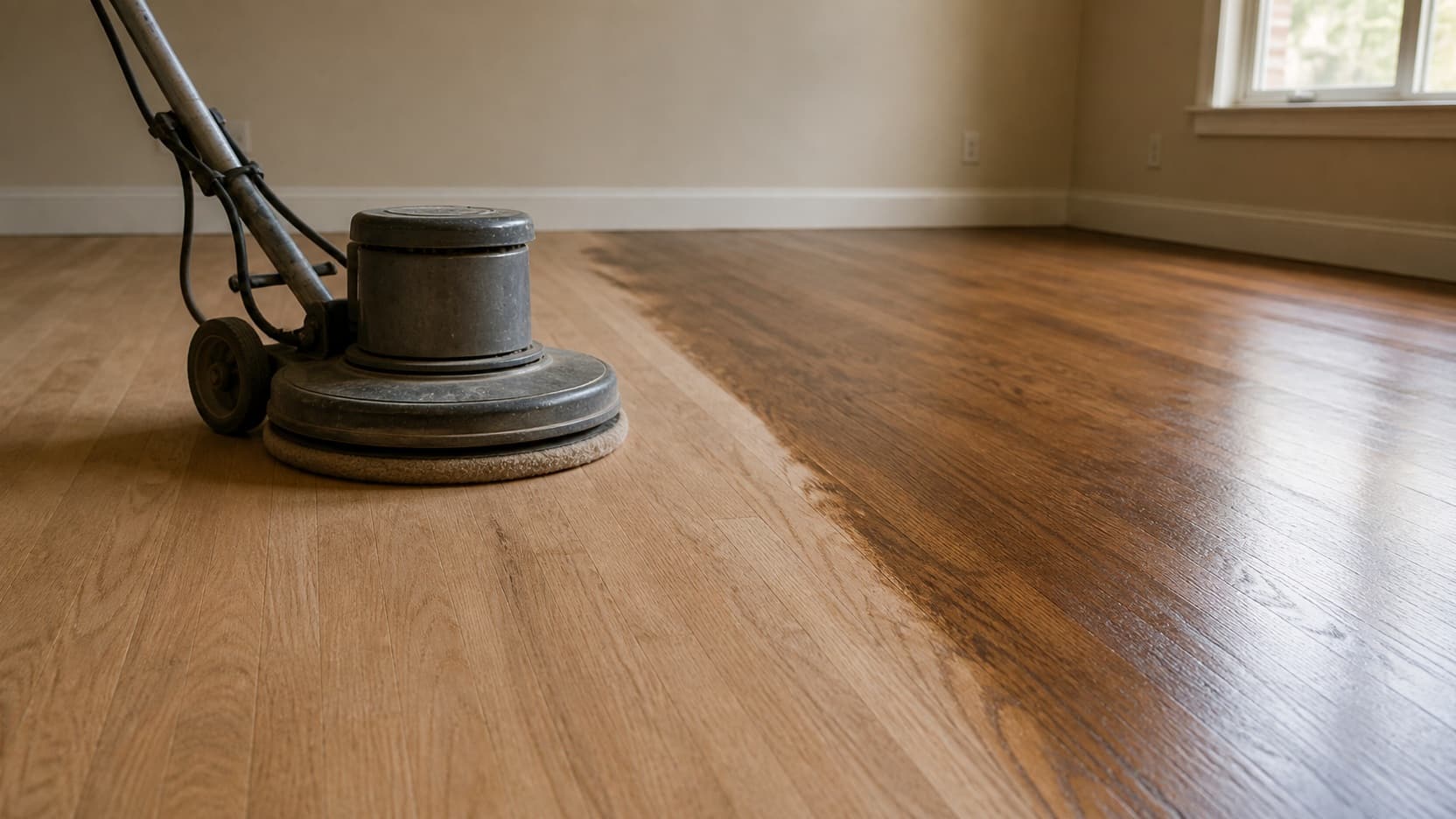
A floor buffer with a screening pad working across a hardwood floor in a Brooklyn apartment before a fresh coat of finish goes on
Buff and recoat

Buff and Recoat Hardwood Floors in Brooklyn

A buff and recoat refreshes a worn finish without sanding a Brooklyn floor back to bare wood. It is quicker, cheaper and far less disruptive than a full refinish.

The five things worth knowing first

This is the cheaper job, and it is not right for every floor. Here is how to tell.

  1. 01

    What it is

    We abrade the finish that is already on your floor with a buffer and a screening pad, clean the whole floor down, and lay a fresh coat of finish over the top. The wood is never exposed. Nothing comes off the boards themselves.

  2. 02

    Why it costs less

    There is far less work in it. No coarse sanding, no repairs to a bare floor, no staining, and one coat rather than a full build. It is a fraction of the labour of a refinish and it uses a fraction of the material.

  3. 03

    How long you lose the room

    Most rooms are a single day of work. You are usually back on the floor the next day rather than the next week, which is why this is the job people book when they have a deadline.

  4. 04

    How much mess it makes

    Very little. Screening produces a small amount of fine powder that the machine collects, and there is no drum sanding at all. In a co-op or condo this is a much easier job to get approved than a full sand.

  5. 05

    When it will not work

    If the finish is worn through anywhere, if there is grey or black staining in the wood, if there are deep scratches or gouges, or if you want the colour changed. A recoat sits on top. It cannot fix what is underneath it.

What a screen and recoat actually does

Your floor has two layers you care about. There is the wood, and there is the finish sitting on top of it doing the protecting. Everyday wear happens to the finish first. Traffic paths dull it, the front hall loses its sheen, and the whole floor starts looking tired well before anything has happened to the wood at all.

A recoat treats that layer and leaves the wood alone. The buffer scuffs the existing finish so a new coat will key to it, we take the floor back to properly clean, and the fresh coat goes down. What you get is the depth and the sheen back, and a floor that is protected again.

The important part is what it does not cost you. Every full sand takes wood off a floor you can never put back, and a floor only has so many of those in it. Keeping a floor on a recoat cycle means the wood underneath stays where it is.

Does your floor qualify

This is the whole decision, and it takes about a minute to work out.

A recoat will work

The finish is dull, tired or scuffed but still unbroken. Traffic paths look flat next to the edges of the room. Scratches are in the coating and you cannot feel them with a fingernail. The colour is one you are happy to keep. There is no grey, no black marks and no water staining in the wood.

You need the full sand

There are bare or grey patches where the finish has gone through. Scratches catch your fingernail. There is dark staining, water damage or pet damage in the boards. Boards are cupped or lifting. Or you want a different shade, which only comes off a bare floor.

A quick test at home: put a drop of water on the dullest part of the floor. If it beads and sits there, the finish is intact and a recoat will work. If it soaks in and darkens the wood, the finish has gone and the floor wants sanding.

How a recoat runs

One visit, and usually one day.

  1. We check the finish

    We look for wear through, staining and damage, and we test how the existing coating is behaving. This tells us whether a recoat will bond properly, which matters more than how the floor looks.

  2. You get the price and the date

    A figure for your floor and the day it happens. If we think you actually need a full sand, you get told that here rather than after we have taken your money.

  3. The room is cleared

    Furniture out and rugs up. This is the part we need from you, and it makes a bigger difference to the finish than anything else on this list.

  4. We screen the floor

    A buffer with a fine abrasive pad goes over the whole floor to key the existing finish. Edges and corners are done by hand where the machine will not reach.

  5. We clean it down properly

    Vacuumed and tacked until there is nothing left on the surface. A recoat over a floor that was not clean enough is the one way this job goes wrong, and it is entirely avoidable.

  6. The coat goes on

    One coat of finish across the whole floor, wet edge kept moving so it lays flat and even.

  7. Back in the room

    You get the walk-on time and the date furniture and rugs can return. They are different, and the second one is the one people rush.

Not sure which one your floor needs? Send a photograph of the busiest path across it and we will tell you.

Call (929) 207-1189

Where a recoat earns its place in Brooklyn

The same job, and three quite different reasons for choosing it.

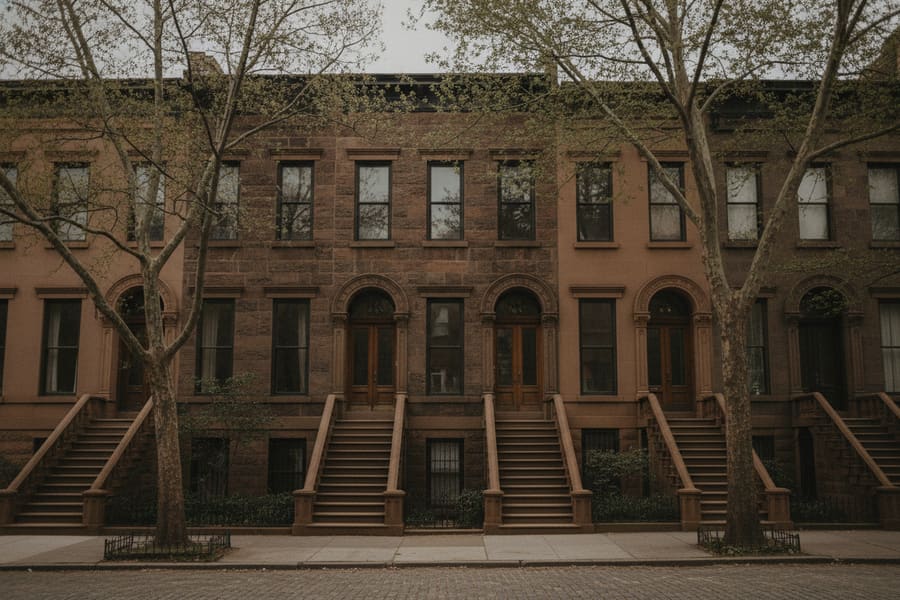
Original hardwood boards running through the parlour of a Brooklyn row house

Brownstone and row house

Old floors have usually been sanded more than once already, and each sand is wood you never get back. Where the finish is worn but the boards are still sound, a recoat protects the floor without spending any of what is left of it.
A hardwood floor in a Brooklyn walk up apartment with sunlight across the boards

Walk-up apartment

No drum sander up four flights, no drums of dust, and neighbours on every side of you barely notice. A recoat is a one day job with a buffer, which changes the whole shape of the week for everybody in the building.

A hallway with hardwood flooring inside a Brooklyn co-op apartment building

Elevator building, co-op or condo

This is the job managing agents approve without a fight. Low dust, low noise, one day, and far less disruption in the common parts. Where a full sand would mean weeks of waiting for approval, a recoat often does not.

Questions about buffing and recoating

How much does it cost to buff and coat hardwood floors?

It is materially cheaper than a full refinish, because there is a fraction of the labour and material in it.

What sets the figure: the floor area, how many rooms, whether there are stairs, how clear the space is when we arrive, and which finish you want on it. Access matters less here than on a sanding job because there is far less equipment coming through the door.

We price your floor after looking at it. The honest caveat is that a recoat is only cheap when it is the right job. Paying for one on a floor that needed sanding means paying twice, so the check comes first.

Should you buff hardwood floors?

If the finish is intact and just looks tired, yes. It is the right maintenance for a wood floor and it is what stops you needing the expensive job later.

If the wood itself is damaged, no. Buffing a floor with worn through patches, deep scratches or staining just puts a new coat over a problem you can still see, and you will not be happy with the result.

The water drop test on the dullest part of the floor answers it in about a minute. Beading means the finish is doing its job and a recoat will work. Soaking in means it is not.

How can I make my hardwood floors look new again?

For most floors the answer is one of two jobs, and which one depends entirely on whether the damage is in the finish or in the wood.

If the boards are sound and the coating is simply worn, a buff and recoat brings the depth and sheen straight back. One day, low mess, and a fraction of the cost of the alternative.

If there is grey in the wood, dark staining, deep scratches or you want a different colour, no coating will hide it and the floor needs sanding to bare wood first. Anything sold as a miracle restorer that skips this is putting a shine over the problem.

Send us a photograph of the worst area and we will tell you which of the two you are looking at.

How do I know if my floor needs a recoat or a full sand?

Look at where people actually walk. If the traffic path is duller than the edges of the room but the wood is the same colour all the way across, that is a finish problem and a recoat fixes it.

If the path has gone grey, white or bare compared with the edges, the finish has worn through and the wood is now taking the wear directly. That needs sanding.

Then run a fingernail across the worst scratch. If it catches, the scratch is in the wood. If it does not, it is in the coating and it will disappear under a recoat.

We check all of this at the estimate. It is the first thing we look at, because getting it wrong is expensive for you in both directions.

If a recoat is not the right job

Find out if your floor qualifies

Send a photograph of the dullest part of the floor and the busiest path across it. That is usually enough for us to say.

Call (929) 207-1189