
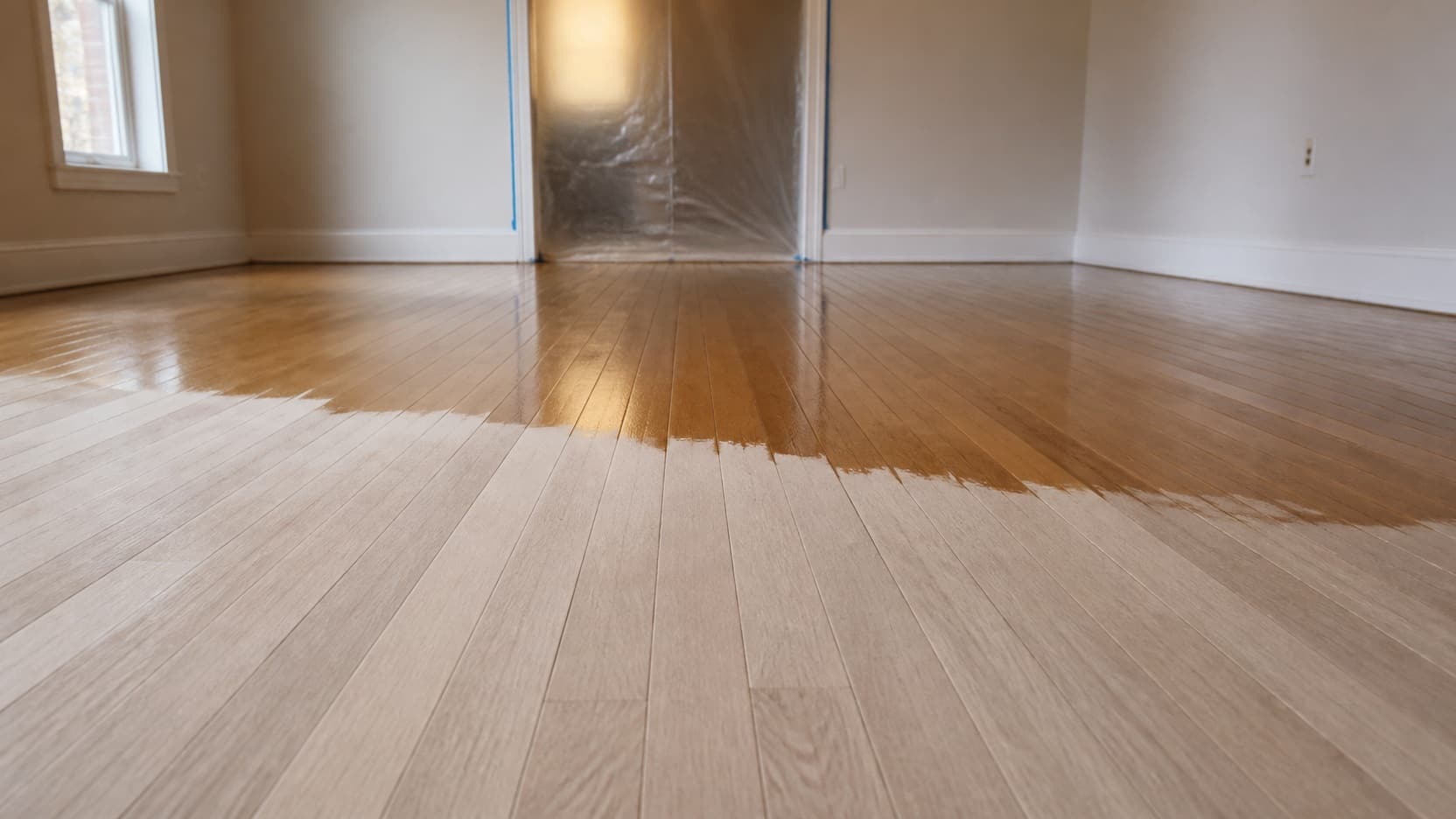
A Brooklyn hardwood floor mid refinish, with freshly sanded bare boards meeting the darker worn finish that has not yet been removed
Refinishing

Hardwood Floor Refinishing in Brooklyn

We sand and refinish worn hardwood floors across Brooklyn, and we tell you when a buff and recoat would do the job for less.

The five questions we get asked most

Answered for a refinishing job, before you have to ask them.

  1. 01

    What decides the price

    Area first, then condition, then access. A clear, empty, square room of solid oak is the cheapest version of this job. What pushes it up is stairs, repairs the floor needs before it can be sanded, furniture we have to handle, a change of colour, and a building that limits our hours.

  2. 02

    How many days it takes

    A room or two is usually a few working days. A whole parlour floor with stairs is longer. Sanding is the quick part. The finish curing between coats is what sets the length of the job, and it is the one stage that cannot be compressed.

  3. 03

    Whether your floor is even a candidate

    A solid board can take several sands across its life. Once there is not enough wood left above the tongue, sanding again causes damage. We measure that before we quote, and if your floor has run out of sands we say so rather than take the work.

  4. 04

    How much of a state your home ends up in

    Our machines run to vacuum extraction, so most of the dust never becomes airborne. We seal the room, cover vents and protect the route in. You should still expect fine dust to find surfaces in the rooms next door, and we would rather tell you that now than have you discover it.

  5. 05

    When you get your room back

    Two dates matter and you get both before we start. When you can walk on it, and when furniture and rugs can go back. Those are not the same day, and going back too early is the single most common way a new finish gets ruined.

What refinishing actually is

Refinishing means taking the floor back to raw wood and building a new finish on top of it. The sanding removes the old coating, the grey, the scratches and whatever the last hundred years of the room did to the surface. What is underneath is usually in far better shape than people expect.

It is the only route to a real change. If you want the colour altered, deep scratches gone, pet stains out or a floor that has gone grey brought back, the finish has to come off. Nothing you put on top of a worn floor will do that.

Most of the wood floors in Brooklyn are worth it. Row houses and pre-war apartments were built with solid oak, maple and pine, often in strip or parquet, and that is material you cannot buy at the same quality now. A floor that looks past saving from standing height is very often two days of machine work away from being the best thing in the room.

A full sand, or a buff and recoat

Plenty of floors do not need the bigger job, and we would rather tell you that at the start than at the end.

Buff and recoat

We abrade the existing finish, clean the floor down and lay a fresh coat over the top. No bare wood, almost no dust, and the room comes back quickly. It works when the finish is tired but still unbroken, and it takes nothing off the wear layer. If your floor is dull rather than damaged, ask about this one first.

Full sand and refinish

We take the floor to raw wood, deal with repairs, then build the finish back in coats. This is what removes grey, deep scratches, stains and old colour, and it is the only way to change the shade. It costs more and takes longer because there is far more work in it.

The dividing line is whether the damage is in the finish or in the wood. Finish is a recoat. Wood is a sand. If you are not sure which you are looking at, that is exactly what the first visit is for.

Floor sanding in Brooklyn, and what happens to the dust

Sanding runs coarse to fine. The first pass takes the old finish and the damage off, and each pass after that closes up the scratch pattern the one before it left. Edges, corners and the last few inches against the skirting are done by hand, because no drum machine reaches them.

Our sanders are connected to vacuum extraction, which pulls the great majority of the dust off the board as it is cut. On top of that we seal the doorways, cover the vents and put protection down on the route in and out. In a walk-up that means the common stairs as well as your apartment.

What that adds up to is a job you can live around rather than move out for, and a great deal less cleaning afterwards. It does not add up to a dust free room, and any contractor who tells you a floor can be sanded without producing dust is selling you the word rather than the method.

How floor refinishing runs, start to finish

None of this is unusual. It is written down because knowing it in advance is the difference between a comfortable week and an anxious one.

  1. We look at the floor

    Board type, wear layer, existing finish, level, squeaks, gaps, and any damage that has to be repaired before a machine touches it. We also work out access and what your building will require.

  2. You get scope, price and dates

    What we are doing, what it costs, how many days it takes, and the two dates that matter to you. The figure is for your floor, and it does not move unless the work does.

  3. The building signs off, if it needs to

    Certificate of insurance to the managing agent, work request approved, service elevator booked, hours agreed. We handle this. It is usually what sets the start date.

  4. We prepare the space

    Route in protected, doorways sealed, vents covered, agreed furniture moved. The emptier the room, the better the floor and the faster the job.

  5. We sand

    Coarse through to fine, then edges and corners by hand. This is the loud stage and it is the short one.

  6. Repairs and preparation

    Boards replaced where they have to be, gaps dealt with, nail holes filled, the whole floor cleaned down to nothing before any finish goes near it.

  7. Colour, if you are changing it

    Stain goes on and gets sampled on your actual floor first, because oak in your room under your light is the only reliable test. What you approve is what you get.

  8. Coats and curing

    The finish goes on in coats with proper time between them. This is the waiting, and it is the part of the job we will not shorten for you.

  9. Back in the room

    We tell you the walk-on date and the furniture date, and what to put under the legs of everything that comes back.

Send a photograph of the worst part of your floor and we will tell you whether it needs sanding or just a recoat.

Call (929) 207-1189

Brooklyn hardwood floors, by building

The borough is not one kind of housing, and the building changes the job more than the neighbourhood does.

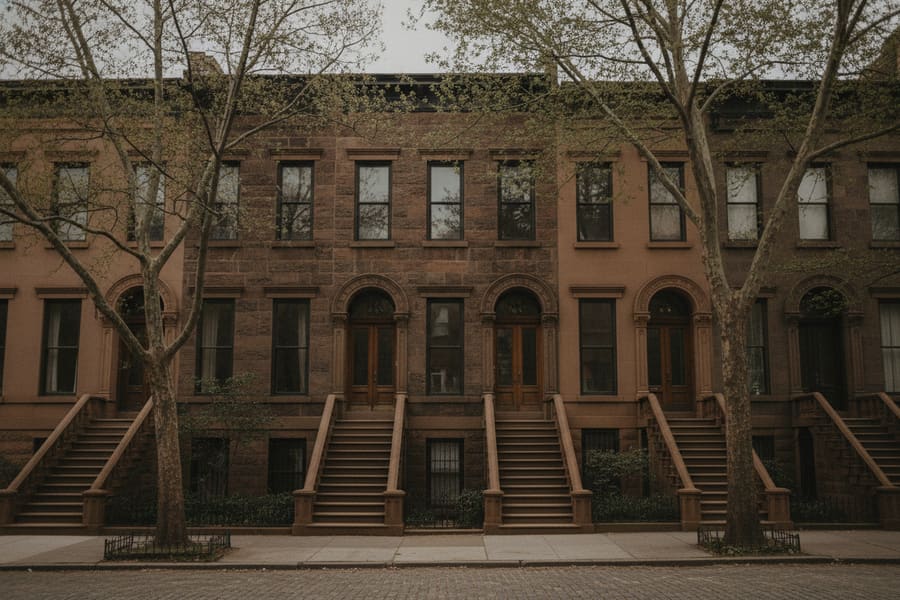
The parlour floor of a Brooklyn brownstone with original hardwood boards and tall shuttered windows

Brownstone and row house

Original plank and parquet, frequently sanded before. We check what is left of the wear layer first, because that decides whether this is a sand or a recoat. Stairs come with the job and they are hand work from top to bottom.
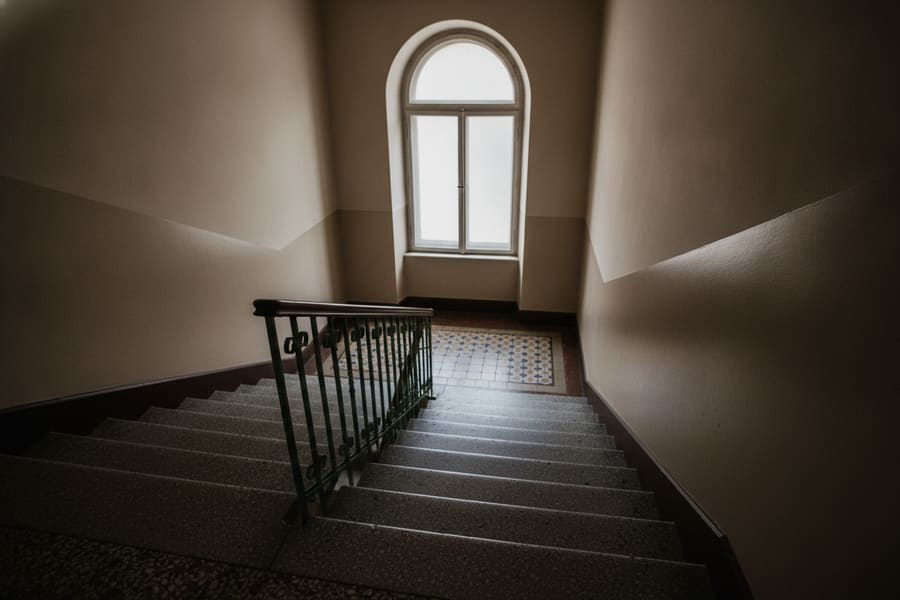
A narrow stairway inside a Brooklyn pre war walk up building with worn wooden treads

Walk-up apartment

Machines and material come up the stairs. We protect the common stairway on the way in and out and work around neighbours on the other side of every wall. Old parquet over a tired subfloor is a common find here and it is dealt with before sanding.

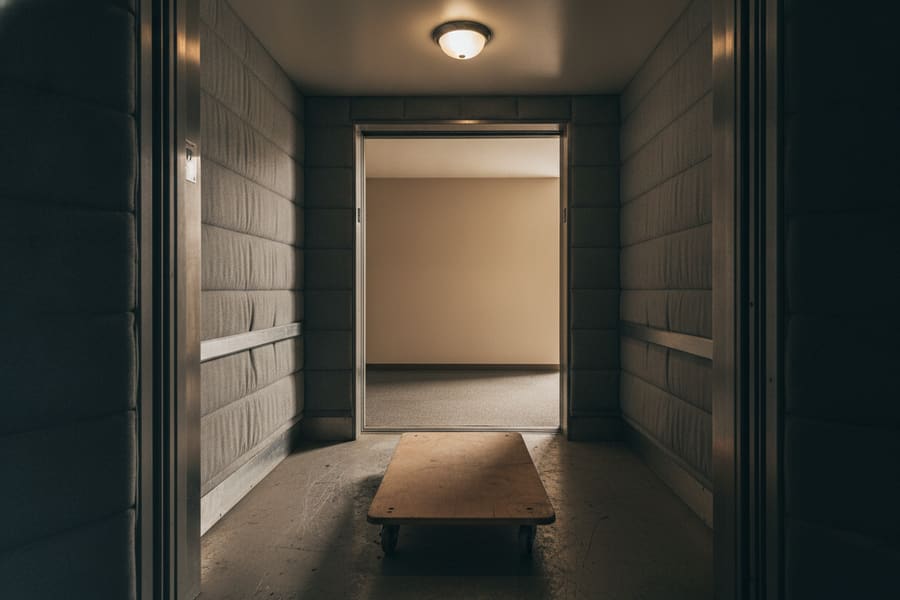
A service elevator with protective padding on the walls inside a Brooklyn apartment building

Elevator building, co-op or condo

The building sets the calendar. Insurance certificate, approved work request, booked service elevator and permitted hours. We put that together as part of the job, and a low dust recoat is often far easier to get approved than a full sand.

Questions about refinishing

How much should it cost to refinish a hardwood floor?

We price the floor rather than apply a rate card, because two rooms of the same size can be very different jobs.

What moves the number: the area, whether it needs a full sand or a recoat, the condition of the boards, repairs, stairs, whether the colour is changing, how much furniture we handle, and whether we are working in a house, a walk-up or a managed building.

You get a figure for your actual floor once we have looked at it, and it does not change unless the scope does. If something turns up under the boards, you hear about it before we act on it rather than on the invoice.

What is the typical cost to refinish hardwood floors in New York City?

Published city wide averages are not much use, because they average a studio in a lift building with a four storey row house and quote you the middle.

The things that make New York work cost what it costs are real, though, and worth knowing: access without a driveway, carrying everything up stairs, building rules that shorten the working day, protection of common parts, and older floors that need repair before they can be sanded.

A straight, empty, ground floor room sits at the bottom of any range you read. Stairs, repairs, a colour change and a co-op calendar move you up it. Tell us the rooms and the building and we will price yours instead of the average.

How long should you stay out of the house after refinishing floors?

It depends on the finish. A water based finish is low odour and lets you back on the floor soonest, usually within a day of the last coat. An oil based polyurethane smells strongly for longer and wants more time before the room is comfortable to be in.

Walking on it and using it are two different milestones. You can usually walk on a finished floor in socks well before rugs, furniture and pets are safe on it, and the finish keeps hardening for a good while after it feels dry.

We give you both dates in writing before we start, along with what to put under furniture legs when it comes back. If somebody in the household has breathing trouble or there is a baby in the apartment, say so at the estimate and we will plan the finish around it.

How much dust does sanding make?

Much less than it used to, and more than none.

Our machines run to vacuum extraction that takes the majority of the dust off the board as it is cut. We seal the room off, cover the vents and protect the route in. In practice that means you can stay in the rest of the apartment and you are not cleaning the place for a week afterwards.

Be sceptical of anyone promising a completely dust free sand. The equipment is genuinely good and the phrase is genuinely marketing. Fine dust will still find its way onto surfaces in adjoining rooms, which is why we would rather you moved the things you care about before we arrive.

How many times can a hardwood floor be sanded?

A solid board has several sands in it across its life. What matters is not how many it has had but how much wood is left above the tongue, because once the sander reaches that the boards start to break up.

Engineered boards are different. The veneer on top is what gets sanded, and depending on its thickness there may be one sand in it or none at all.

We check this before quoting, usually at a threshold or a vent where the edge of a board is visible. If your floor has no sand left, a recoat may still be an option and installation is the honest answer if it is not. Either way you get told before you have paid for anything.

If refinishing is not the answer

Buff and recoat

If the finish is worn but the wood underneath is sound, this is quicker, cheaper and far less disruptive.

Wood floor repair

If the problem is damage in one area rather than wear across the whole floor.

Find out what your floor needs

Send the rooms, roughly the area and a photograph of the worst part. We will tell you whether it is a sand or a recoat before anyone visits.

Call (929) 207-1189