
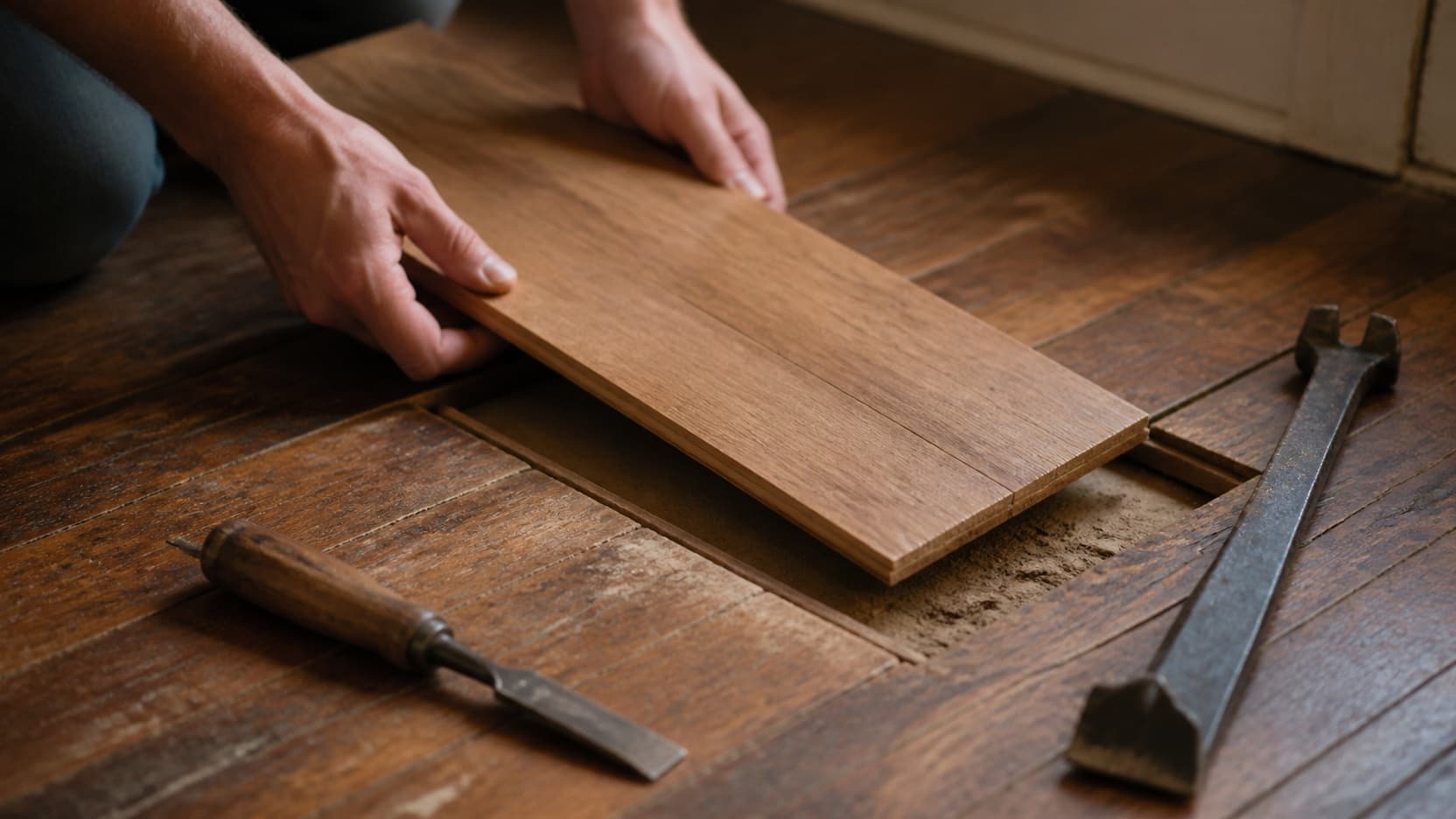
A replacement floorboard being cut in to a damaged area of an existing Brooklyn hardwood floor
Repair

Wood Floor Repair in Brooklyn

We repair damaged hardwood floors across Brooklyn, from a few split boards to a room that has taken water.

The five questions we get asked most

Answered for a repair, before you have to ask them.

  1. 01

    Whether it can be repaired at all

    Almost always, and far more often than people assume. Individual boards can be lifted and replaced without touching the rest of the floor. What decides it is how far the damage has spread and whether whatever caused it has stopped.

  2. 02

    Whether it will match

    New wood next to old wood never matches on day one, because your floor has aged and the replacement has not. What makes a repair invisible is refinishing the area afterwards so everything is the same colour and sheen. We will tell you honestly how close we expect to get before we start.

  3. 03

    What it costs

    Repairs are priced by the work rather than the area, because three boards in the middle of a room can be more work than thirty along a wall. Access to the damaged boards, matching the material and whether refinishing follows are what move the figure.

  4. 04

    How urgent it is

    A squeak or a scratch can wait. Water cannot. Wet boards keep moving, and damage that would have been four boards on Monday can be half a room by the end of the week. If your floor is wet, the useful thing is to get it looked at now.

  5. 05

    Whether the whole floor then needs doing

    Not necessarily, but it is worth asking. If your floor was already due a refinish, doing the repair and the refinish together is cheaper than doing them separately and gives a far better result, because the repaired area disappears completely.

What we repair

Split, cracked and broken boards. Boards that have cupped, crowned or lifted. Squeaks and movement underfoot. Gaps that have opened between boards. Gouges, deep scratches and burns. Pet damage and urine staining. Water damage from an overflow, a leak, a radiator or a neighbour upstairs. Loose or damaged stair treads and nosings. Failed patches somebody else did.

Under all of that there are really two questions. Is the damage in the finish or in the wood, and has whatever caused it stopped. A scratch in a coating is a refinishing job. A soft board is a replacement. And there is no point repairing anything under a leak that is still leaking.

The other thing worth saying plainly is that a lot of what looks like ruined floor is not. Black marks, grey patches and staining frequently sit in the finish or in the top fraction of the wood, and they come out when the floor is sanded. We check that before recommending anyone pull boards up.

Water damage, and why it is the one to move on

Wood swells when it takes on water and shrinks as it dries. When boards are fixed down and cannot move sideways, that swelling has to go somewhere, so the edges lift and the board cups. If it dries unevenly it crowns instead. Either way the floor stops being flat.

The good news is that a floor that has cupped is not automatically ruined. Wood that dries out slowly and evenly often flattens back a long way on its own, and what is left can frequently be sanded out. The mistake is sanding it too early, while the boards are still moving, because then it flattens as it finishes drying and you are left with a dished floor that has already lost its wear layer.

So the sequence matters. Stop the water, dry the floor properly and give it time, then look at what is actually left. We would rather come and look, tell you to wait three weeks and come back, than take the job today and do worse work.

Where boards are genuinely gone, soft, split or growing something, they come out. That part does not improve with waiting.

Floor taken water? Send us a photograph now rather than after it dries, and we will tell you what to do first.

Call (929) 207-1189

Floor repairs across Brooklyn

What causes the damage, and what fixing it involves, changes with the building.

Original wide plank flooring in a Brooklyn brownstone with a repaired section blended into the boards around it

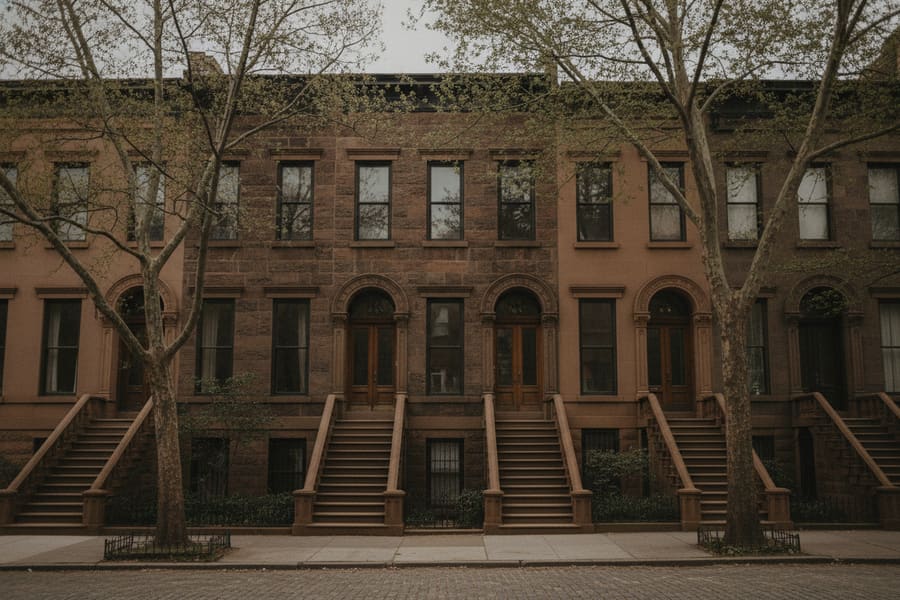
Brownstone and row house

Century old boards, old repairs done by other people, and settlement that has opened gaps and started squeaks. Matching original plank or parquet is the real skill here, and reclaimed material is often a better match than anything new.
Loose parquet blocks being refitted in a Brooklyn walk up apartment floor

Walk-up apartment

Radiator leaks and water from the apartment above are the two we see most. Old parquet blocks come loose in patches and can usually be relaid rather than replaced. Work is quiet, contained and does not need the whole floor lifted.

A localised floor repair underway in a Brooklyn condo apartment

Elevator building, co-op or condo

Water from a neighbour is the usual cause, and a repair is far easier to get approved than a full replacement. We keep the work to the affected area, which matters when your building limits noise, hours and access.

Questions about floor repair

Can damaged wood floors be repaired?

Yes, in most cases, and usually without replacing the floor.

Individual boards can be cut out and replaced, cupped boards can often be flattened and sanded once they have dried, squeaks can be fixed from above, gaps can be filled or splined, and scratches that are in the finish come out with refinishing.

What cannot be saved is wood that has gone soft, rotted or is growing mould, and floors where the subfloor underneath has failed. Even then it is usually a section rather than the whole room.

The floor being old is not a reason it cannot be repaired. It is often the reason it is worth repairing.

Can you replace just a section of hardwood floor?

Yes. Cutting out and replacing an area is normal work and it is what we do most.

The board is cut and lifted out without disturbing its neighbours, the subfloor underneath gets checked and made good, and new boards are woven in so the joints stagger naturally rather than forming a visible rectangle.

The part people underestimate is the finish. A perfectly executed patch still shows as a lighter square until the area is refinished, because the rest of your floor has spent years going darker. Refinishing the room, or at minimum the whole plane of the floor from wall to wall, is what makes it disappear.

For a floor already due a refinish, this is the ideal time to do both.

Will a repaired area match the rest of the floor?

With refinishing afterwards, usually well enough that you have to be told where it is. Without refinishing, no, and we would rather say that at the start.

Three things drive the match. Getting the species, cut and board width right. Getting the grain direction and joint stagger right so it does not read as a patch. And then bringing the whole area to one colour and sheen with a sand and refinish.

Old floors are the hard case and the interesting one. A hundred year old board has a colour new wood simply does not have, so reclaimed material of the same age often matches better than anything you could buy today. Where the exact profile no longer exists, boards can be milled to match.

We will show you the intended material and tell you honestly how close we expect to get before you commit to anything.

Can a water damaged floor be saved?

Often, and the deciding factor is usually how quickly the water was stopped rather than how bad it looks right now.

Stop the source first. Then get the floor properly dry, which takes longer than the surface suggests, because the water is in the boards and the subfloor rather than on them. A floor that looks dry can still be wet enough to keep moving.

Then wait, and look again. Cupped boards very often flatten a long way back on their own as they dry evenly. Sanding while they are still moving is the classic mistake, because the floor keeps changing shape after you have already taken the wear layer off it.

Once it is stable we can tell you what is genuinely lost. Frequently it is a few boards and a refinish rather than the room. Where wood has gone soft or is growing mould it comes out, and that part should not wait.

What often goes with a repair

Buff and recoat

If the repair is small and the rest of the floor only needs its finish freshening.

Send us a photograph of the damage

A wide shot of the room and a close one of the worst area is usually enough for us to tell you what you are dealing with.

Call (929) 207-1189